
Actualiteit
My Experience Doing Archival Thesis Research Abroad
By Aoife Buckley
To some people, a trip to Brussels is centered around the Atomium, EU buildings, or enjoying craft beers in a busy square of tourists buying overpriced magnets. I made a same day return journey to Brussels to visit the city archive, a carefully packed bag not for a weekend away, but with only the items allowed in the reading room and a book for the train.
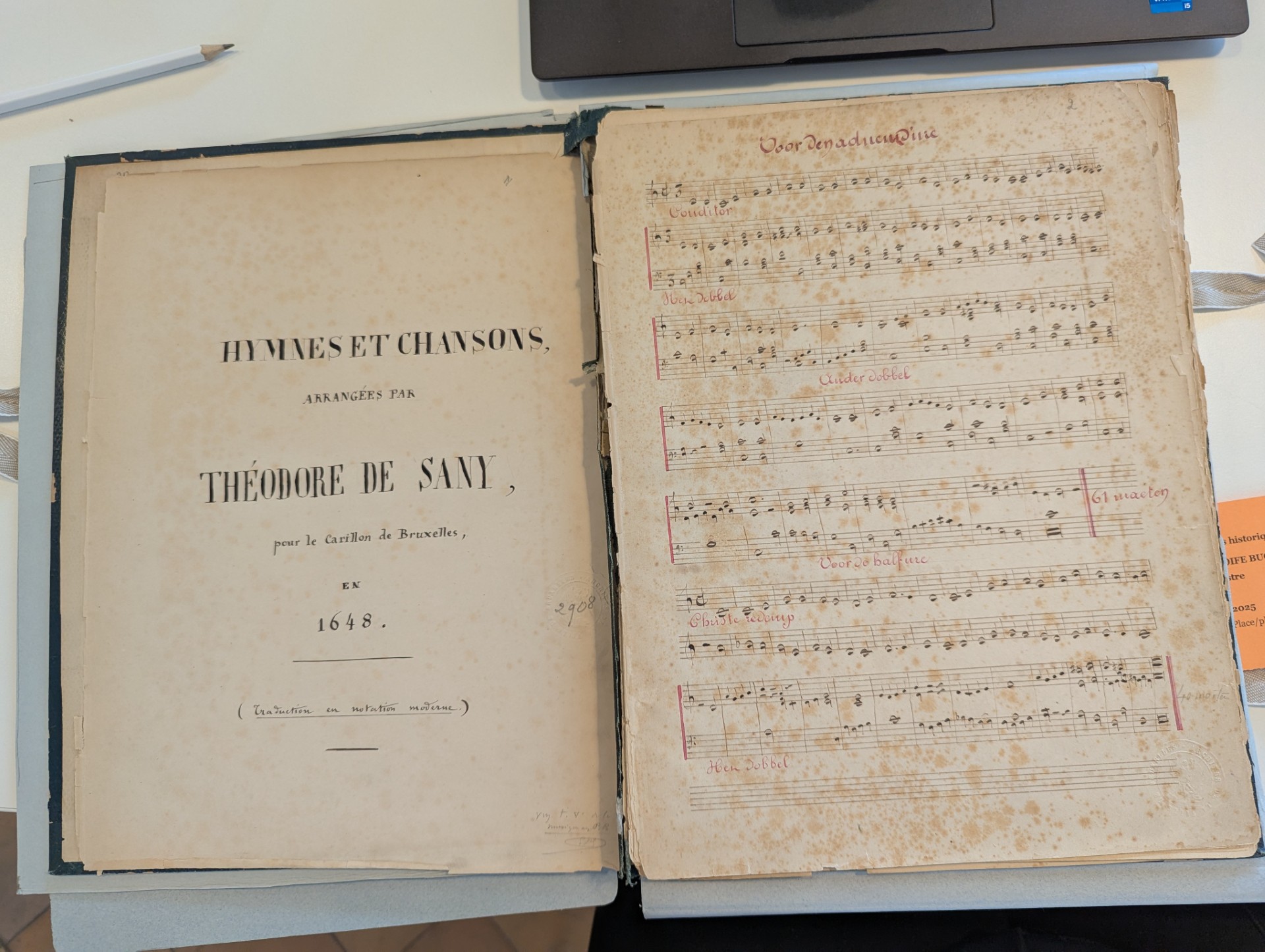
The honoursworthiness of my thesis is rooted in the archival research that I am undertaking. I have developed my paleographic skills, as well as translating sources from Dutch (and occasionally French). Many of my sources have not been digitalized, and whilst some archives had a fast turn around time, or an easy system to request digitization, I still needed to do thesis field research in both Groningen and Brussels in order to compile the sources for my thesis. Besides, the experience of handling a source from 400 years ago alights something that is indescribable- truly, I have never felt more excited to be a history student.
My train travel costs were generously reimbursed by the Humanities Honours Programme, as I viewed my visits to the archive as essential thesis field research. Going to archives as part of the Honours-worthiness of my thesis was not just rewarding in the sources I ended up using for my thesis, but also those I didn’t. Working with archival sources felt a bit like a needle in a haystack- before my visit to Brussels, I needed to comb through the catalogue online to request certain manuscripts. As my thesis, which is about the experience of time in the Early Modern Low Countries, through the carillon, I was looking for sources which tackled the musical and political experience of timekeeping, and the sensory history of urban spaces. Titles of manuscripts often weren’t helpful, especially if what I was looking for was part of a larger work, and just as I had gotten used to one archive search and catalogue system, the next would be completely different. Amongst my research, I found many archival works which were excellent primary sources for my thesis, and many which I just found personally very interesting. As the archive only allowed me a four-hour time slot, and I had to work through skim-reading and translating (which goes quite slowly with 17th century manuscripts), if I found something that made my history loving self 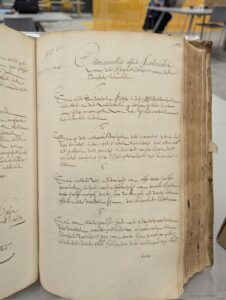 fascinated, I often had to move on if it wasn’t going to support my thesis. Seeing the handwriting, binding, and craftsmanship in each document, and the careful preservation that lead me being able to work with it 400 years later was incredible. I managed to copy and photograph the documents that I needed to, thanks to the Humanities Honours Programme, and develop and practice research skills I otherwise wouldn’t have.
The whole thesis process is one I have greatly enjoyed- researching and writing about a topic I am interested in, and being able to visit archives and feel like a “real historian” is something that has brought me lots of joy in the past few months. I also have an even greater appreciation for archives and archivists- the care and amount of work of maintenance and the vast size of archives is hard to describe, and to be able to show up to my appointment with a neat (and staggeringly tall) stack of boxes with files felt like a beautiful delivery resulting from lots of work behind the scenes. If you are looking for a way to make your thesis Honours-worthy, or just to engage with primary sources in a fantastic way, I couldn’t recommend working with archives more!